


Beyond the Final Whistle: How the World Cup Can Help Parents Raise Curious and Thoughtful Children
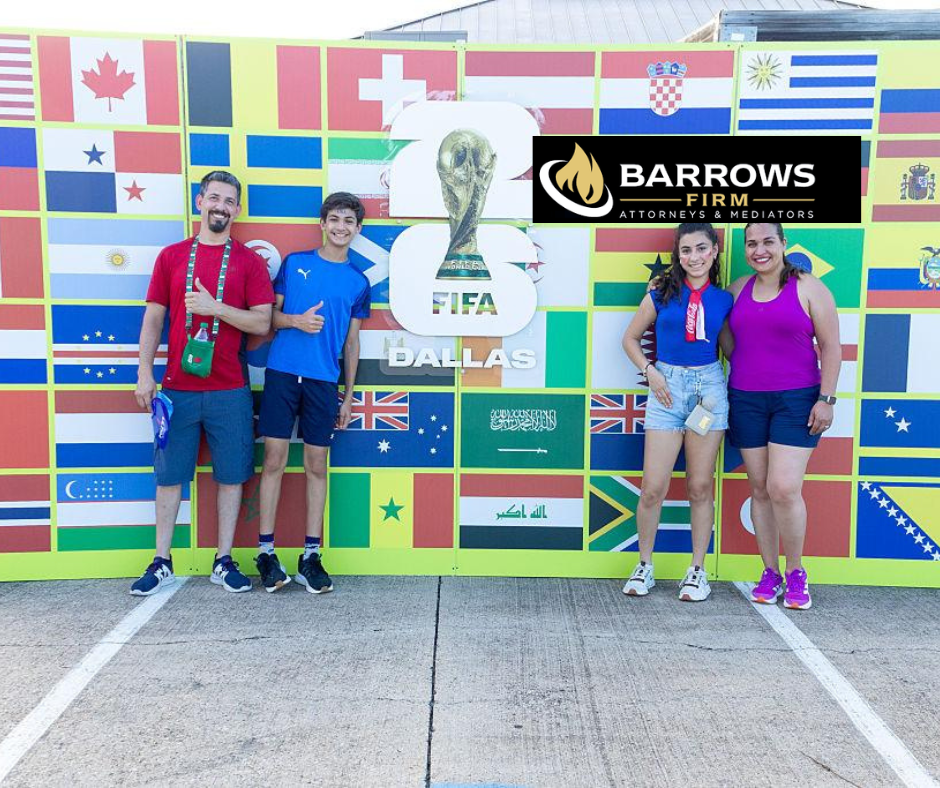
The 2026 FIFA World Cup has given families throughout North Texas an unusual opportunity to experience a truly international event close to home. The Dallas region was selected to host nine matches, more than any other host city, along with a multiweek fan festival at Fair Park featuring live match screenings, music, food, cultural programming, and visitors from around the world. For children growing up in the Dallas-Fort Worth area, the tournament has therefore been much more than something appearing on television. It has been a visible reminder that their community is connected to a much larger and more varied world.
The excitement surrounding the World Cup also gives parents an opening to begin conversations that might not arise during an ordinary week. Children may wonder why people have traveled so far to support a team, why soccer inspires such intense loyalty in other countries, or why fans from different cultures celebrate the same sport in different ways. Those questions can lead to meaningful discussions about geography, history, national identity, language, tradition, and the ways people form communities. Parents do not need to be soccer experts to make use of the moment. They simply need to be willing to explore the questions with their children and show them that curiosity is a strength.
For divorced and separated parents, these opportunities can also serve as a reminder that raising a child involves more than administering a possession schedule. Court orders provide necessary structure, but children also benefit when their parents recognize experiences that may broaden their understanding of the world. A World Cup match, cultural festival, summer camp, museum visit, concert, historical site, or trip to a new city may become part of a child’s education in ways that cannot be measured by a report card. When parents can cooperate to make those experiences possible, they give their children something more valuable than an afternoon of entertainment. They help children learn how to observe, question, compare, and think independently.
Check Out Soccer Shots Children’s Soccer Experience in DFW!
Meet Attorney Leslie Barrows, a Boy Mom Who Loves Sports!
Don’t Miss Out! Listen to the Barrows Firm Podcast!
The World’s Game Offers a Lesson in Perspective
Americans are accustomed to living in a country where football, baseball, and basketball dominate much of the sports conversation. Soccer continues to grow in the United States, particularly among young players, but many children may not fully appreciate the role the game occupies elsewhere. In many countries, soccer is woven into family histories, neighborhood identities, and national traditions. Support for a club or national team may pass from grandparents to parents to children, creating bonds that extend far beyond the result of a single match.
Learning that another culture places great importance on something unfamiliar is a useful exercise in perspective. Children sometimes assume that their own customs are universal because those are the customs they encounter every day. An international event helps them see that people elsewhere may organize their lives differently, celebrate different holidays, eat different foods, speak different languages, and follow sports that receive less attention in the United States. None of those differences makes one culture inherently better or worse than another. They simply demonstrate that the world contains many ways of living, communicating, competing, and belonging.
Parents can use this realization to help children become more comfortable with unfamiliarity. Instead of dismissing something because it is not immediately understood, children can learn to ask why it matters to someone else. They may discover that a song sung by visiting supporters has a historical meaning, that the colors on a team’s jersey reflect a national symbol, or that a country’s style of play is connected to generations of sporting tradition. The lesson is not that children must adopt every custom they encounter. It is that understanding should come before judgment.
Helping Children Separate Assumptions From Experience
Children today receive an enormous amount of information before they have developed the experience needed to evaluate it. Social media posts, online videos, news commentary, advertising, and conversations among adults can all influence how they view people and places they have never encountered. Some of that information may be accurate and useful. Some may be incomplete, exaggerated, emotionally charged, or entirely false. Teaching children to recognize the difference is now an essential part of parenting.
An international event provides a natural opportunity to demonstrate why firsthand experience matters. Visitors may arrive in North Texas carrying assumptions about Americans, Texans, or life in the United States. Local families may hold their own assumptions about people arriving from other countries. A brief conversation in a restaurant, at a public event, or while waiting for a match can complicate those impressions. People who initially appear very different may discover shared interests in family, work, education, food, travel, music, or sports. The individual standing in front of us is almost always more complex than the stereotype attached to a nationality, profession, region, political belief, or background.
Parents can help children examine this process without turning the conversation into a lecture. They might ask what the child expected before attending an event, what the child actually observed, and whether anything challenged that expectation. They can discuss the difference between a fact, an opinion, a prediction, and an assumption. They can also model intellectual honesty by acknowledging when their own impressions were incomplete. Children learn critical thinking not merely from being told to question information, but from watching adults reconsider conclusions when new evidence becomes available.
This skill will matter long after the World Cup ends. A child who learns to pause before accepting a claim is better prepared to evaluate online information, peer pressure, advertising, and emotionally persuasive arguments. A child who understands that personal experience has limits will also recognize the need to consult reliable sources and listen to people with different perspectives. Critical thinking does not require children to distrust everything they hear. It requires them to develop the patience and judgment needed to decide what deserves their confidence.
Experiences Outside the Usual Routine Build Confidence
Parents frequently observe a change in children after they attend summer camp, join a new team, participate in a youth program, or travel without the full comfort of their normal routine. A child who initially feels hesitant may return more independent, adaptable, and confident. That growth occurs because unfamiliar settings require children to solve small problems, communicate with new people, and discover that they can function successfully outside the environment they know best.
The World Cup can create a similar experience, even for a family that never enters a stadium. A visit to the fan festival, a conversation with an international visitor, a meal at a restaurant serving unfamiliar food, or an evening spent learning about the countries competing in a match can expand a child’s frame of reference. Parents might locate those countries on a map, study a few phrases in another language, learn how children there attend school, or research the history behind a national flag. The sporting event becomes an entry point into subjects that might otherwise seem remote or abstract.
Summer camps offer many of the same benefits because they place children among people outside their regular social circles. A child may share a cabin, classroom, field, or activity with peers from different neighborhoods, family structures, economic circumstances, religious traditions, or cultural backgrounds. In learning how to cooperate with them, children discover that friendships do not require identical experiences. They also gain practice navigating disagreement, adapting to group expectations, and speaking for themselves when a parent is not immediately present to resolve every difficulty.
These lessons are particularly valuable in an era when technology can make a child’s world appear both enormous and very narrow. Young people can view events occurring anywhere on the planet while remaining surrounded by online content selected to reinforce their existing interests and assumptions. Real-world experiences interrupt that pattern. They introduce unpredictability, face-to-face conversation, and the possibility of discovering something the child did not already know to search for.
Co-Parenting Requires Structure and Reasonable Flexibility
Possession schedules are important because they give children and parents consistency. A clear court order reduces uncertainty, identifies each parent’s time, and provides a framework that can be enforced when cooperation breaks down. Parents should not disregard those orders simply because a different arrangement would be more convenient on a particular day. When the parents cannot agree, they are generally expected to follow the court-ordered schedule.
At the same time, many Texas possession orders allow parents to use a mutually agreed schedule and rely on the detailed schedule in the order when no agreement can be reached. Parents may therefore agree to exchange days or adjust possession when both believe doing so will benefit the child. The key is genuine agreement. One parent should not make a unilateral change, assume silence means consent, or place the child in the middle of the negotiation. Important adjustments should be clearly communicated and documented so there is no later misunderstanding about the terms.
A major event such as the World Cup is a useful example. A parent may obtain tickets for a match that occurs during the other parent’s possession. A visiting relative may offer to take the child to an international celebration, or an opportunity may arise to attend an event with classmates or teammates. A cooperative response does not require either parent to surrender the importance of the existing order. It requires them to consider whether a temporary exchange, an additional day, or a makeup period can preserve both parents’ time while allowing the child to participate.
Healthy flexibility should remain centered on the child rather than becoming a system of favors tallied between adults. Parents who treat every accommodation as a debt to be collected later may turn a positive opportunity into another source of conflict. A better approach is to decide what arrangement serves the child, confirm the details in writing, and provide equivalent parenting time when appropriate. The objective is not to determine which parent benefits most from the change. It is to make a thoughtful decision that supports the child’s relationships, stability, and development.
Children Remember How Their Parents Handled the Opportunity
The memories children carry into adulthood are not always the ones parents expect. A child may forget the final score of a match but remember walking through a crowd filled with different languages, sharing food with a visiting family, or hearing a parent explain why another country’s traditions deserve respect. The child may also remember whether both parents helped make the experience possible or whether adult conflict overshadowed it.
This does not mean parents must agree to every proposed trip, event, or schedule change. Cost, safety, transportation, school obligations, the child’s age, and the terms of the court order all matter. Parents are entitled to ask reasonable questions and make informed decisions. The goal is not automatic agreement. It is to evaluate the opportunity fairly rather than rejecting it because it originated with the other parent or occurs during a time the adults consider exclusively their own.
Children benefit when parents demonstrate that cooperation is possible even after the adult relationship has changed. They learn that a disagreement can be discussed without becoming a battle, that plans can be adjusted without creating chaos, and that supporting a child’s experience does not diminish either parent’s role. Those lessons may shape how children later handle their own relationships, responsibilities, and conflicts.
Parents should also remember that they do not need expensive tickets or elaborate travel plans to create meaningful experiences. Watching a match together, preparing a meal associated with one of the competing countries, visiting a local cultural institution, or asking a child to research the history of a team can all lead to valuable conversations. What matters most is not the price of the activity. It is the attention parents give to helping the child interpret and learn from it.
Raising Children Who Know the World Is Bigger Than Their Immediate Problems
Childhood challenges can feel overwhelming because children have limited experience against which to measure them. A disagreement with a friend, a disappointing grade, a lost game, or tension between parents may temporarily seem like the entirety of a child’s world. Parents cannot and should not dismiss those feelings. They can, however, help children understand that life contains many places, people, possibilities, and future experiences beyond the difficulty of the moment.
Exposure to a wider world gives children perspective without minimizing their concerns. It shows them that people live through different circumstances, solve problems in different ways, and build meaningful lives under conditions the child may never have considered. This awareness can nurture gratitude, resilience, ambition, and empathy. It can also encourage children to imagine futures that extend beyond the expectations of their current environment.
For children whose parents are divorcing or living separately, this broader outlook may be especially valuable. Family changes can create uncertainty, and children may fear that the structure they knew is disappearing. New experiences cannot erase that disruption, but they can reassure children that their lives will continue to include discovery, relationships, achievement, and joy. Both parents can contribute to that sense of possibility by supporting the child’s interests and making room for experiences that promote growth.
The World Cup will soon move on, the international visitors will return home, and North Texas will resume its familiar routines. The more lasting opportunity is the one parents choose to preserve. They can teach children that the world is larger than their neighborhood, that unfamiliar people should be approached with curiosity rather than assumptions, and that credible conclusions require observation, questions, and evidence. They can also show that parents living in separate households remain capable of working together when an opportunity matters to their child.
At The Barrows Firm, we understand that family law involves much more than court orders, deadlines, and legal rights. Those matters establish the structure families need, but the purpose of that structure is to help children live stable, healthy, and meaningful lives. The most important parenting lessons often take place beyond the courtroom, during the ordinary conversations that follow an extraordinary experience. The World Cup has brought the larger world to North Texas. Parents now have the opportunity to help their children understand what it can teach them.


